
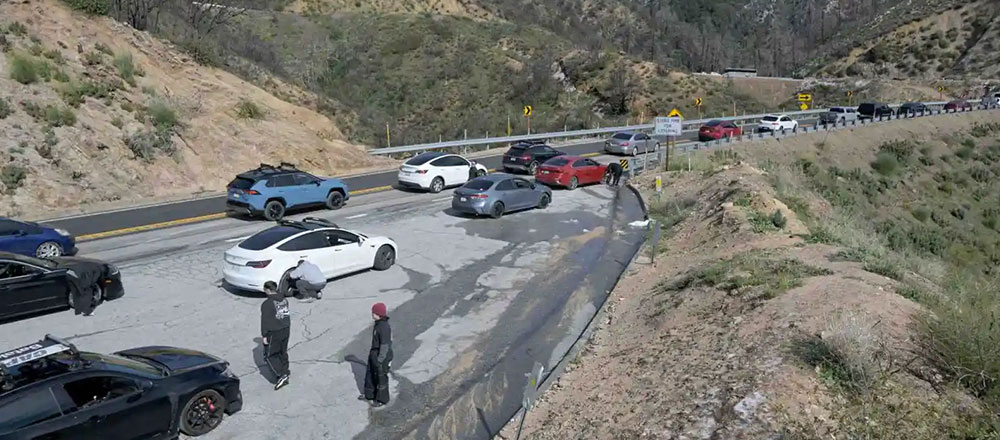
Inland Empire drivers know the pain of commuting more than 90 minutes to work. A half-dozen San Bernardino and Riverside communities rank among the top 20 super-commuting towns in the U.S. And, as if additional exposure to gridlock, potholes and lane closures weren’t enough, super-commuters also draw the short straw when it comes to paying for road maintenance.
Traditional gas-powered vehicle drivers – about 3.4 million of us in the Inland Empire – on average pay $338 each year in gas taxes to maintain state and local transportation infrastructure. But the system is changing. As more electric vehicles and highly fuel-efficient cars hit the road, the gas tax generates less revenue even though drivers are traveling just as many miles.
Research shows nearly 40% of super-commuters use vehicles that get less than 20 miles per gallon, meaning they buy more fuel and pay more in gas taxes just to get to work. Meanwhile, higher-income commuters are more likely to drive newer, fuel-efficient vehicles that contribute less to transportation funding.
The disparity is inequitable and acutely felt by super-commuters and other traditional gas-powered drivers as gas prices surge above $5 per gallon. California must find a fairer system to pay for maintenance of roads, bridges and transit without adding taxes for the drivers who are already doing their part.
Laborers like me who build the transportation infrastructure Californians depend on understand the need to do more, not less, but funding is dwindling. And it’s going to get worse unless we do something about it.
It’s estimated that California will lose more than $31 billion in gas tax revenue over the next 10 years unless we replace lost revenue, according to projections from the California Transportation Commission.
While the gas tax helps fund much-needed roadway improvements, an increasing number of drivers are using electric and fuel-efficient vehicles. Californians purchased 124,755 zero-emission vehicles (ZEVs) in the third quarter of 2025, which was 29% of new car sales, the highest quarterly sales share ever reported in California, according to the Governor’s Office. These drivers also use the highways and roadways, leaving the rest of us to pick up the tab for transportation funding.
We’re all concerned about potholes damaging our cars, and while traditional gas-powered drivers pay the gas tax, other drivers don’t contribute their fair share to cover the costs of road maintenance and improvements. The impacts on our roadways are bound to worsen as EVs and fuel-efficient vehicles become more popular.
While the move toward ZEVs aligns with the state environmental goals, it also requires us to act quickly to develop a more balanced approach to funding our roads and highways.
The good news is that work is being done to tackle this problem.
Assemblymember Lori Wilson, chair of the Assembly’s Transportation Committee, has convened informational hearings in Sacramento to examine this problem and work toward a fair solution. She’s leading a series of in-person and virtual town hall meetings across the state, including Southern California, to gather input and discuss the best path forward.
Whether you’re a super-commuter or just driving around town, everyone should do their part to keep our roads safe. Right now, that includes tuning into the meetings and speaking up for fair transportation funding. Our state’s future is riding on it.